Last updated 2026-08-19
TL;DR
Plan on $50,000 to $180,000 for the trailer, then Connecticut's 6.35% sales or use tax, plates, insurance, and a legal dump site. There is no single luxury restroom trailer license. You need a registered business, a DRS tax permit if you rent, vehicle papers, and lawful septage handling. New builds often take months. Confirm fees with the agency that collects them.
How much does luxury restroom trailer cost in Connecticut?
Most operators should budget $50,000 to $180,000 for the unit, then add Connecticut sales or use tax at 6.35%, registration, insurance, water and waste gear, and a first-year operating stack that can rival a car payment. Nobody publishes an official Connecticut MSRP list for these trailers. The spread is the build, not the ZIP code.
Connecticut does not set a price for these trailers. You are buying custom fabrication plus a small pile of state paper. The trailer check is the loud number. Tax, plates, pumping contracts, and winter storage are what turn a pretty quote into a real budget.
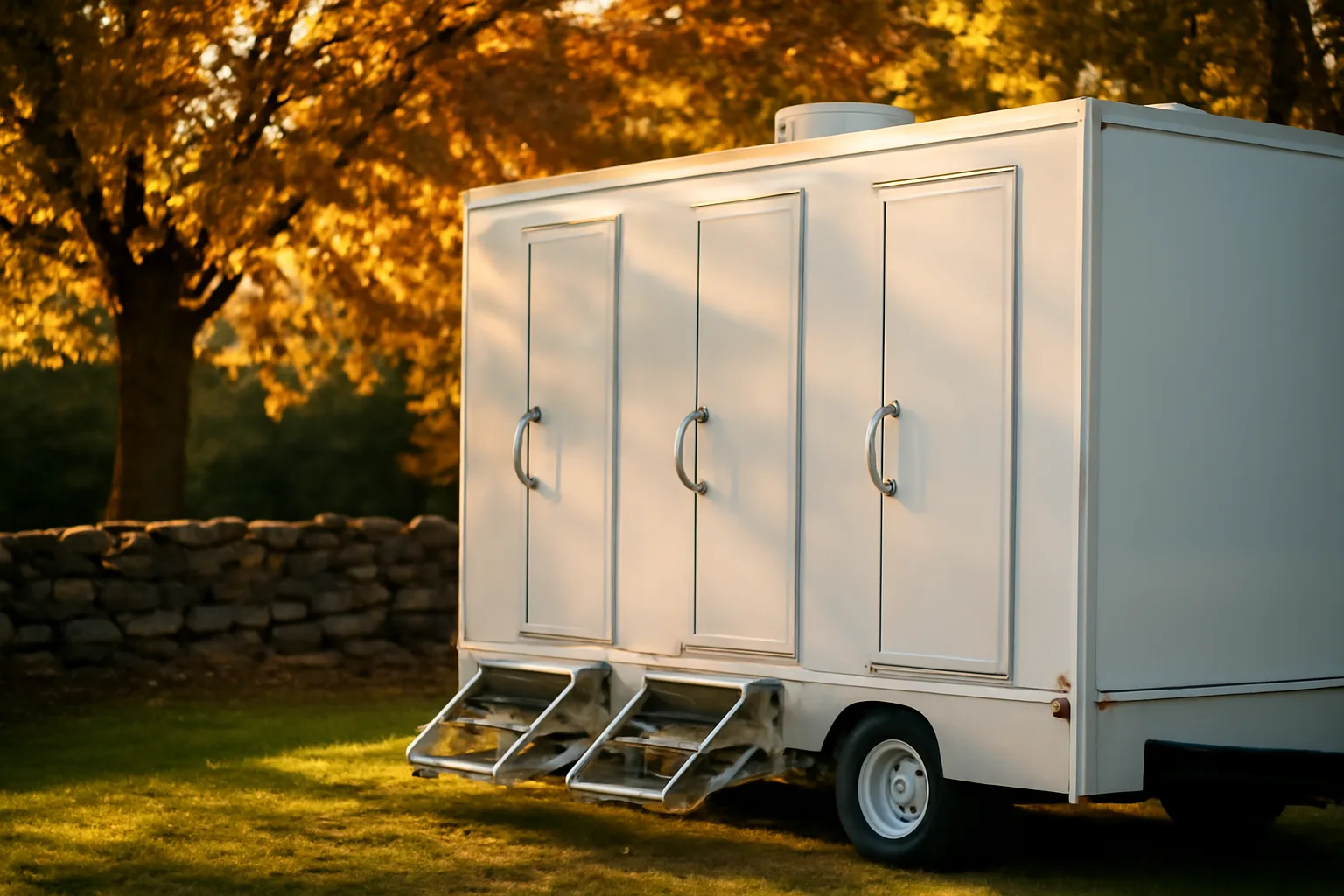
I treat the mid five figures as a compact 2 or 3 station climate controlled box, often with a sink line and a generator hookup. Six figures buys a dual entry 6 to 10 station unit with a true ADA stall, more fresh water, and finishes that survive a Fairfield wedding photoshoot. Used iron can undercut that if the tanks, HVAC, and frame are documented. Pretty interior film over a tired waste system is a waste of money.
Freight into New England is not a rounding error. A builder in the South or Midwest will add transport, possible overwidth planning, and winter delivery risk. Get that number in writing before you fall in love with a floor plan.
If you want a sense of how the same equipment conversation changes in a bigger market, the California cost guide is a useful contrast. Same product family. Different tax and road rules.
What does a new luxury restroom trailer sell for versus used?
A new compact luxury unit commonly quotes from about $50,000 to $90,000. A large ADA dual side trailer commonly quotes from about $100,000 to $180,000 or more. Used 2 and 3 station luxury boxes often trade from the low $20,000s into the $50,000s when the mechanicals are honest. Those bands come from public builder quotes and resale listings, not a Connecticut index.
I would not treat any of those figures as a sticker you can wave at a lender without a current written quote. Finish level, tank size, heat, air, water heaters, generators, and ADA geometry move the number fast. Marble look panels do not. Heat and dump valves do.
Used is where I would start if this is year one and you still have to buy a tow rig. Pay for a shop that knows trailers, not a friend with a flashlight. Look at waste tank seams, slide mechanisms if it has them, roof leaks, and whether the electrical system was wired like a house or like a campsite accident.
New makes sense when a venue packet demands a current ADA stall and you cannot prove an older unit meets the 2010 ADA Standards for Accessible Design. [8] Confirm the stall clearances with the builder against that document. Do not take "wedding luxury" as a code term. It is marketing.
Hold 10 to 20 percent of the purchase price for first fit out. Hoses, a transfer pump if you will not self pump, extra water, a decent winter kit, and the boring tools that keep you from calling a locksmith at 11 p.m. on a lawn in Greenwich.
What are the first-year operating costs in Connecticut?
Plan a first year that can run $15,000 to $40,000 after you own the trailer, before you pay yourself, if you actually work the unit. That range is a planning band, not a state statistic. Insurance, storage, fuel, pumping, consumables, and a tow vehicle payment dominate. Connecticut winters make storage and freeze protection real line items, not optional polish.
Sales tax on taxable rentals sits at 6.35% under Connecticut's sales and use tax statutes. [2] You collect it and you remit it. Price your weekend package so the tax does not come out of soap and diesel.
Labor is not cheap here. Connecticut indexes the adult minimum wage each January 1. Read the current CT DOL minimum wage page before you price an attendant. [11] If you hire anyone, workers' compensation is not a vibe. The Workers' Compensation Act requires an employer to secure compensation. [10] Confirm coverage with the Workers' Compensation Commission and your carrier. I am not going to invent a premium.
Pumping is either a contract with a licensed hauler or a relationship with a wastewater plant that will take septage. Tipping fees vary by facility. Nobody has a clean statewide average I trust. Get two local quotes before you promise a Sunday night wedding turn.
I would skip the wrap and the custom scent diffuser. Spend on a backup heater and a place to park that will not freeze the valves. A restroom trailer in January is a different machine than a June tent wedding.
Do you need a license for luxury restroom trailer in Connecticut?
There is no single state license titled luxury restroom trailer. You still need a legal business, tax registration if you rent or sell taxable services, proper vehicle credentials, and a lawful way to handle septage. Skipping the paper is how a pretty trailer becomes an uncollectible invoice.
Form the entity with the Commercial Recording Division. Confirm the current certificate of organization fee on the Secretary of the State forms and fees page before you pay, because boards update schedules. [15] The commonly cited figure is $120, but the fee schedule is the only number I trust. Annual report fees live on that same schedule. I would file the LLC before the deposit check to a builder clears.
If you rent the trailer, register with the Department of Revenue Services and collect tax when the rental is taxable. DRS publishes the business registration path. [13] Do not guess exemptions. Ask DRS in writing if you think a job is tax free.
Vehicle side: title and register the trailer with DMV. If the truck and trailer combination hits commercial thresholds, you may need a USDOT number. FMCSA says you must have a USDOT Number if you transport property in interstate commerce and the vehicle has a GVWR or GCWR of 10,001 pounds or more. [4] CT DMV explains when that spills into state commercial credentials. [12] Confirm. Do not take a Facebook group as the board.
If you pump your own tanks, stop and call DEEP before you buy a vacuum truck. Trailer wastewater is septage. Uncontrolled discharge is how you meet Connecticut's water pollution rules the hard way. [9] Most new operators should contract pumping for year one. It is less romantic. It is also less likely to become an enforcement file.
Local health departments can still require sanitation details on a temporary event permit. The town packet wins over your brochure. Build extra lead time for that email.
How long does luxury restroom trailer take in Connecticut?
A used trailer you already found can be on the road in a few weeks if title, registration, insurance, and a dump contract cooperate. A new custom build commonly takes several months from signed spec to delivery. I will not promise a DMV or SOTS clock. Boards do not owe you my optimism.
Entity formation can be quick online. Tax registration is a separate queue. Insurance binding is often days if your loss history is simple and the trailer has a serial number. The long pole is almost always the factory slot or the wait for a clean used unit that is not a hidden leak.
Waste contracts and venue insurance certificates eat calendar. A Saturday wedding in Litchfield that asks for a $1 million additional insured endorsement is a normal ask, not a special one. Start that paperwork when the couple pays the deposit, not the Thursday before.
If you need an ADA stall built to the 2010 Standards, say that in the purchase order. [8] Change orders in week ten are how a fall delivery becomes a spring delivery. I would rather delay a logo than delay heat tape.
Compare this timeline mentally with a warmer state. The Florida cost guide is a reminder that freeze planning is a Connecticut delay other markets skip.
What taxes hit a restroom trailer purchase or rental in Connecticut?
Connecticut's sales and use tax rate is 6.35% on taxable sales and rentals of tangible personal property, unless a specific exemption applies. [2] Buy a trailer from an out of state dealer and you still need to deal with use tax when you bring it home. DMV and DRS will not be confused about that even if you are.
On an $80,000 taxable purchase, 6.35% is $5,080. On a $2,000 taxable weekend rental, the tax is $127. Those two sentences are the whole philosophy. Price it or eat it.
Federal depreciation is a tax conversation with a CPA, not a slogan. IRS Publication 946 is the manual for how to depreciate property, including listed property rules that can snag vehicles. [6] Confirm Section 179 and bonus treatment for the year you place the trailer in service. I am not going to invent a 2026 dollar cap.
If the power unit is a heavy highway vehicle at 55,000 pounds taxable gross weight or more, IRS Form 2290 may apply. The IRS page on Form 2290 is plain about that 55,000 pound line. [7] Most compact restroom setups stay under it. Some truck and gooseneck pairs do not. Read the door sticker.
Keep rental contracts clean. Taxable labor versus taxable rental versus a bundled event package is how people create DRS correspondence. I would rather a boring invoice than a creative one.
Do you need a USDOT number or a CDL to tow in Connecticut?
Maybe. Weight and commerce decide it, not the word luxury. FMCSA's rule of thumb is 10,001 pounds GVWR or GCWR in interstate commerce for a USDOT number when you haul property. [4] Intrastate commercial use can still pull you into CT DMV commercial rules. Check the DMV USDOT page and the ratings on both the truck and the trailer. [12]
A CDL enters when the combination or the truck hits commercial driver thresholds. FMCSA's CDL materials are the starting point, including the familiar 26,001 pound GVWR line for many Class B situations. [14] A one ton dually and a mid size restroom trailer can stay under. A bigger gooseneck with a loaded water tank can sneak over. Water weighs 8.34 pounds per gallon. That is not a metaphor.
I would not buy the trailer first and the truck second. Spec the heaviest loaded tongue weight and the worst boat ramp style lawn you will actually attempt in Westport. Then buy the truck that is honest about that.
Plates and inspection are DMV work. Confirm current trailer registration fees on the DMV fee materials. I will not invent a plate price.
If you later run jobs across the New York line, treat that as interstate even if it feels like a long errand. That is when the FMCSA sentence stops being theoretical.
How do waste pumping and DEEP rules change the cost?
Pumping is a standing cost, not a surprise. You either pay a hauler by the visit or you carry the permit burden and the truck cost yourself. For a new operator, I would pay the hauler. Keep the first year simple.
Connecticut water pollution law is not impressed by a cedar soffit. The state's water pollution control statutes are the framework. [9] You need a legal receiving facility. Fields, storm drains, and the woods behind the venue are not a business plan.
Get the plant or hauler to say in writing what they accept, what they charge, and weekend hours. Sunday night after a 200 person tent reception is when you learn a plant is closed. That phone call is cheaper than a tank you cannot dump.
Self pumping only pencils if you already live in septage work. A vacuum truck, wash down, liability, and DEEP questions arrive together. Confirm transporter and discharge rules with DEEP before you spend. No approval is implied here.
Construction accounts can be steadier than weddings. OSHA sets jobsite toilet counts in 29 CFR 1926.51. OSHA writes, "Toilets shall be provided for employees according to the following table." [3] That table is why contractors rent volume. Luxury finish is optional on a site. Fixture count is not.
What insurance and venue rules add to the bill?
Venues will ask for general liability, often $1 million per occurrence, and they will ask to be additional insured. That is custom, not a statute I can cite as a statewide mandate. Budget for the certificate dance on every nice property.
Auto liability on the tow vehicle is separate. Inland marine or scheduled equipment coverage is what actually pays if someone sideswipes the trailer in a hotel lot. Confirm limits with a licensed Connecticut agent. I will not invent a premium range and pretend it is actuarial science.
If you have employees, the Workers' Compensation Act is the statute you work under. [10] Sole operators still need to be honest about who is on site. A cousin who "just helps" is how claims get ugly.
ADA is a civil rights standard, not a vibe. If you hold the unit out as accessible, the 2010 ADA Standards are the measuring tape. [8] A wide door and a grab bar slapped on later is how you fail a planner walkthrough.
I would read the venue's load in rules before I brag about a 36 foot box. Some lawns want turf protection. Some historic sites want a max weight. That can force a smaller trailer even if your warehouse favorite is huge.
What size trailer actually fits Connecticut roads and jobs?
Stay at or under 102 inches wide unless you enjoy permits. Connecticut's highway use rules cap ordinary vehicle width at one hundred two inches. [5] Most builders already aim at that 8 foot 6 inch box. Mirrors and trim still matter.
Length and axle placement decide whether you can swing a farm driveway in Litchfield County. I would rather a 20 to 26 foot luxury pair of rooms that I can place without a spotter team than a parade float I only use four times a year.
Oversize permits exist for a reason. CT DOT runs oversize and overweight permitting. If your unit is extra wide or extra long, confirm before you advertise same weekend delivery from Hartford to Greenwich. I-95 will not care about your timeline.
Water and waste capacity is the real size. A pretty 3 stall that needs a mid event pump on a 150 guest wedding is the wrong 3 stall. Ask the builder for hours of use at a stated headcount, then discount that claim.
If you want another mountain state take on access and weather, skim the Colorado cost guide. Different hills. Same lesson about not buying the longest floor plan you saw in a photo.
Should you buy or just rent for Connecticut weddings and sites?
Rent someone else's trailer if you have fewer than a busy season of firm deposits. Buy when you can see a path to enough paid days to cover tax, insurance, storage, and a truck that is not also the family SUV. I like boring math more than a vinyl wrap reveal.
Wedding Saturdays in Fairfield and the shoreline can support luxury rates. Weekdays often will not. Construction and campus work fill gaps if you can stand hose work more than champagne flutes. Mix the fleet use or the asset sits.
A paper spec still helps even if you rent first. Mid planning I would rather a tight checklist than another mood board. LuxJohnPath sells a $199 one-time Wedding Trailer Spec Kit at /start if you want that worksheet. The public rules above do not depend on it.
Buying out of state to "save tax" is how people meet use tax later. Run the 6.35% on the real purchase price and compare apples. [2] A cheap trailer with a rotten waste tank is not a discount.
Look at neighboring cost writeups if you will market across state lines. The Delaware cost guide is the closest state packet in this set. Different DMV. Same need for a dump plan.
What would I actually spend money on in year one?
I would buy fewer stalls and better heat. I would buy a documented used unit or a simple new 3 station before a chandelier model. I would pay for pumping contracts, a real insurance binder, and a truck that is not scared of a loaded tongue. I would not pay for scent machines, custom glass, or a wrap in year one.
Cash that must sit in reserve: a pump emergency, a tire and axle hit, and one cancelled weekend that still costs fuel. Connecticut weather cancels lawn jobs. Your lender will not care.
If you hire, budget true wage cost off the current DOL minimum wage posting, plus workers' compensation, not a handshake rate you saw in a group chat. [11] [10]
Keep a folder: LLC papers, DRS permit, registration, insurance, hauler contract, and the ADA sheet from the builder. That folder closes more venue deals than a new logo.
Other state packets are useful only as a comparison, not as Connecticut law. If you like side by side reading, use the Illinois cost guide or the Georgia cost guide. Then come back and confirm every Connecticut number with the board that collects it.
LuxJohnPath is an independent publisher, not a law firm and not a hauler. If you want the spec worksheet after you have read the statutes, it lives at /start. The trailer still has to pass DMV, DRS, and the plant that takes the waste.
Frequently asked questions
Do you need a license for luxury restroom trailer in Connecticut?
No single license uses that name. You need a registered business, DRS tax credentials if you make taxable rentals, DMV title and plates, and a legal septage plan. USDOT or a CDL can apply by weight and commerce. Confirm each item with SOTS, DRS, DMV, and DEEP. Do not treat this as approval.
How much does luxury restroom trailer cost in Connecticut?
Budget about $50,000 to $180,000 for the trailer, then 6.35% sales or use tax if the purchase is taxable, plus plates, insurance, fit out, and pumping. Used compact units can sit closer to $20,000 to $50,000. There is no official state MSRP. Get a written builder or seller quote.
How long does luxury restroom trailer take in Connecticut?
A clean used unit can move in weeks if title, insurance, and a dump contract are ready. A new custom build often takes several months. Entity filing can be fast. I will not guarantee SOTS, DRS, or DMV timing. Order ADA and heat details up front so change orders do not slide a season.
Is there sales tax on restroom trailer rentals in Connecticut?
Taxable rentals of tangible personal property generally follow the 6.35% sales and use tax rate. Register with DRS and remit what you collect. Some jobs may be exempt. Do not guess. Ask DRS and keep the answer with the contract. Price tax on top so it does not erase your soap budget.
Do I need a CDL to tow a luxury restroom trailer?
Only if the truck or combination meets federal and state commercial driver thresholds, including common GVWR lines such as 26,001 pounds. A loaded water tank changes the math. Read both door stickers and FMCSA CDL materials, then confirm with CT DMV. I would spec the truck before I buy a long gooseneck.
Does a wedding restroom trailer have to be ADA?
If you advertise an accessible unit, build to the 2010 ADA Standards, not to a brochure word. Many planners and public venues will ask for a compliant stall. Private backyard jobs vary. I would not call a unit accessible unless the builder measured it against that standard and put it in writing.
Can I dump restroom trailer waste myself in Connecticut?
Not onto the ground, and not into a storm drain. Waste is septage and belongs at a permitted facility. Self pumping can pull you into DEEP transporter rules. Most new operators should hire a hauler in year one. Confirm any self haul plan with DEEP before you buy a vacuum truck.
What size luxury restroom trailer works for a 150 person Connecticut wedding?
A well designed 3 station unit with real water and waste capacity is the usual planning start, not a 10 stall palace. Peak cocktail hour matters more than headcount vanity. Ask for hours of use at that guest count, then assume guests are harder on the unit than the brochure. Confirm the lawn can hold the axle weights.
Do Connecticut towns require a permit for a restroom trailer at an event?
Often the event needs a local health or land use packet, and sanitation is a line on that packet. The trailer itself may not have a special town license, but the gathering might. Ask the town clerk and the local health department early. Their checklist beats your Pinterest board.
Can I park and run the business from my house?
Zoning decides that, not your LLC stamp. Many Connecticut towns limit commercial trailers and customer traffic in residential zones. Check zoning and HOA rules before you buy. Indoor or yard storage that keeps tanks from freezing is a cost either way. Do not assume a home occupation card covers a 28 foot box.
What happens if I buy the trailer out of state?
You still face Connecticut use tax and DMV title work when you base it here. The 6.35% rate is the planning number on a taxable purchase. Out of state "no tax" ads are incomplete. Confirm the current process with DRS and DMV. Inspect the unit before it crosses a state line.
Does OSHA care about luxury finish on a jobsite trailer?
No. OSHA 1926.51 cares that toilets exist in the right counts for the crew size. Construction clients pay for open stalls and a pump schedule. Save the stone look laminate for Saturday weddings. Quote fixture count from Table D-1, then add whatever comfort the GC will actually pay for.
What insurance do venues in Connecticut usually ask for?
Most ask for general liability with a $1 million occurrence limit and additional insured language. Auto and physical damage on the trailer are separate. If you have staff, add workers' compensation. Ask an agent for a certificate workflow you can repeat. I will not invent a premium.
Is a winter package worth it in Connecticut?
Yes if you want shoulder season or January work. Heat on tanks, lines, and the room is the difference between a rental and a block of ice. I would fund heat before I fund decor. If you will store the unit empty from December to March, say that out loud so you do not overbuy propane gear.
Sources
- Connecticut Department of Revenue Services, Sales and Use Tax Information: Connecticut sales and use tax rate is 6.35% on taxable sales and rentals unless an exemption applies.
- OSHA, 29 CFR 1926.51 Sanitation: Construction jobsites must provide toilets according to OSHA Table D-1 employee counts.
- FMCSA, Do I Need a USDOT Number: A USDOT number is required for interstate property transportation at 10,001 pounds GVWR or GCWR or more.
- Connecticut Department of Transportation, Oversize/Overweight Permits: Ordinary vehicle width in Connecticut is limited, and wider loads require an oversize permit.
- IRS Publication 946, How to Depreciate Property: Federal depreciation and listed property rules for business equipment and vehicles are set out in Publication 946.
- IRS, About Form 2290: Heavy Highway Vehicle Use Tax applies to highway motor vehicles with taxable gross weight of 55,000 pounds or more.
- U.S. Department of Justice, 2010 ADA Standards for Accessible Design: Accessible toilet compartments and clearances are measured against the 2010 ADA Standards.
- Connecticut Department of Energy and Environmental Protection, Water Discharge Permits: Connecticut water pollution rules govern unlawful discharges and the legal handling of wastewater.
- Connecticut Workers' Compensation Commission: Connecticut employers must secure workers' compensation coverage under the Workers' Compensation Act.
- Connecticut DMV, Commercial Vehicles: CT DMV explains when commercial operators need USDOT credentials for vehicles operated in the state.
- Connecticut DRS, Registering Your Business: Businesses that make taxable sales or rentals must register with the Department of Revenue Services.
- FMCSA, Commercial Driver's License: CDL requirements are triggered by commercial vehicle weight and use thresholds, including common 26,001 pound GVWR cases.
- Connecticut Secretary of the State, Business Services: Current entity filing and annual report amounts should be confirmed on the SOTS forms and fees schedule.