Last updated 2026-08-19
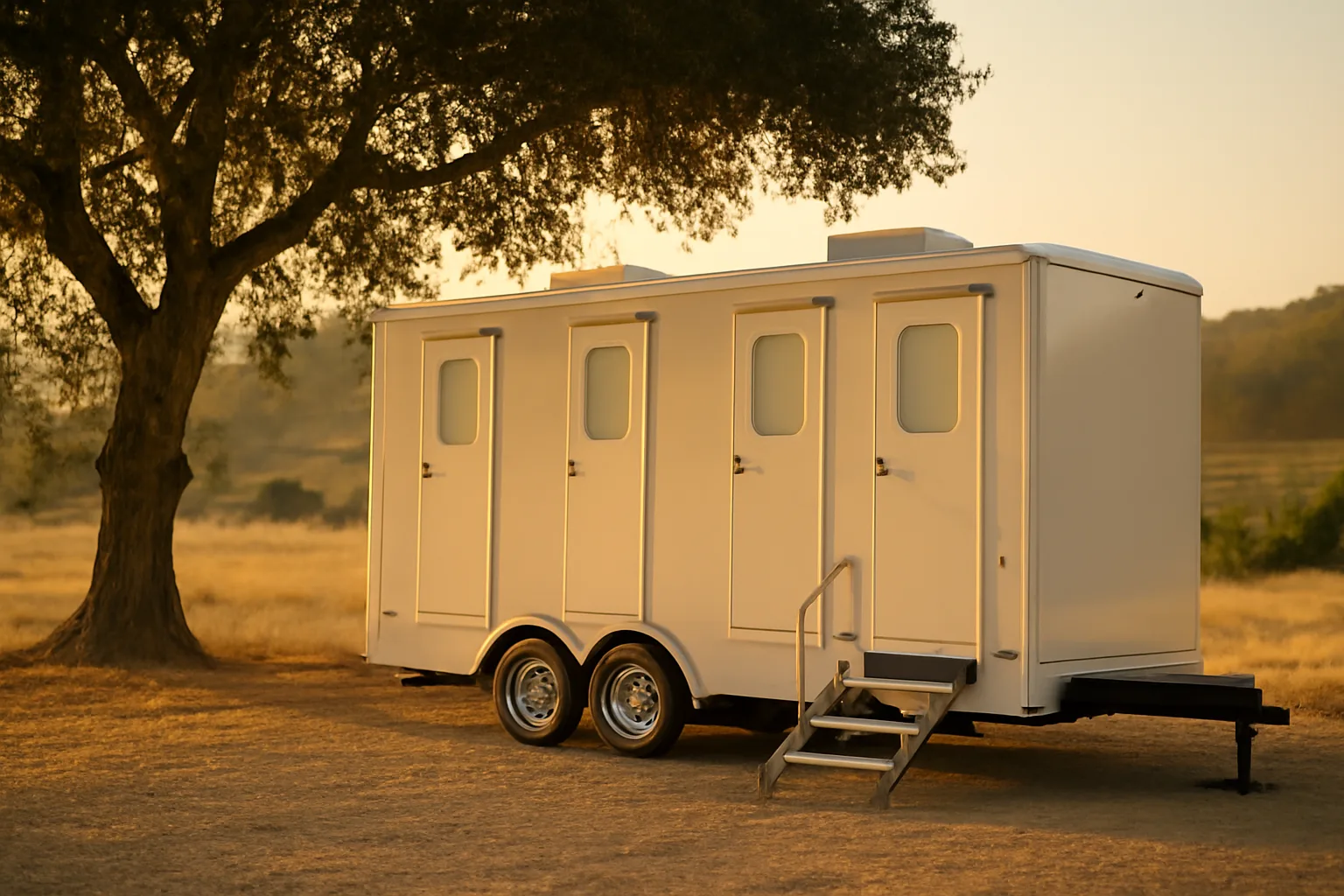
TL;DR
California does not issue a single luxury restroom trailer license. You still need DMV registration, a local business tax certificate, a CDTFA seller's permit for rentals, and a legal dump site. CSLB usually stays off the table for event rental, not for hard plumbing. Confirm fees and timing with each board. No honest writer can guarantee approval dates.
Do you need a license for a luxury restroom trailer in California?
No. There is no statewide luxury restroom trailer license in California. You need a stack of ordinary papers instead: DMV registration for the trailer, a city or county business tax certificate, a CDTFA seller's permit if you rent the unit, and a legal place to dump wastewater. Skip the myth that one gold-stamped card covers the whole trade.
People type luxury restroom trailer california into a search bar and expect a named board, a numbered class, and a wall certificate. That is how contractor, barber, and alcohol licenses work. This trade does not. The state regulates the vehicle, the sales tax, the business entity, the employees, and the waste. It does not run a restroom trailer academy.
California Vehicle Code section 4000 is blunt about the rolling stock. It says, "A person shall not drive, move, or leave standing upon a highway, or in an offstreet public parking facility, any motor vehicle, trailer, semitrailer, pole or pipe dolly, or logging dolly, unless it is registered and the appropriate fees have been paid under this code." [1] If the unit sits on a public street or a public lot, registration is not optional.
A city can still demand its own business tax certificate under Business and Professions Code section 16000, which lets a city license any business in its bounds for regulation or revenue. [2] That local paper is not a state restroom license. It is a tax receipt with your DBA on it. Lose it and a code officer can shut a Saturday unload.
Own the trailer for private ranch use and never rent it, and your stack shrinks to DMV plus whatever your county says about sewage. The minute you invoice a wedding, a studio lot, or a general contractor, the tax and local business paper turn on. Treat "I just deliver toilets" as a business, because that is how the Franchise Tax Board and CDTFA will treat it.
Compare this with thinner stacks if you operate across borders. The Arizona restroom trailer license notes and the Colorado license path are useful only as contrast. Do not copy another state's checklist onto a California invoice.
What papers actually replace a single California license?
The working substitute is a short list you can put in one folder: entity papers, a seller's permit, a city or county business tax certificate, DMV registration, a dump agreement, and insurance certificates. That folder is the license, in practice. Nothing else hides in Sacramento waiting to be discovered.
Start with the entity. Most operators form an LLC and file Articles of Organization with the California Secretary of State. The LLC-1 form lists a $70 filing fee. [3] Confirm the fee on the form you actually submit, because SOS can change a fee line. After you exist on paper, the Franchise Tax Board wants its annual LLC tax. Revenue and Taxation Code section 17941 sets that tax at eight hundred dollars ($800). [4]
Then tax on the rental. A lease of tangible personal property is a sale under Revenue and Taxation Code section 6006. [5] Restroom trailer rental is a lease of a thing, not a mysterious service. CDTFA Publication 73 tells you to hold a seller's permit before you make sales. [6] The permit itself does not carry a state issuance price. Local business tax is separate, and it is not free.
DMV paper sits next to the tax paper. Registration fees vary with how the unit is classified and with weight. Use the DMV registration fees page and the office that will title the trailer. [7] Do not guess a commercial weight fee from a forum screenshot.
Waste paper is local. California does not hand every pumper a single portable sanitation card. Counties and publicly owned treatment works decide who may discharge septage. Get the rule in writing from the plant or the county environmental health desk that actually takes the load.
Hire people later and you add EDD employer accounts and workers' compensation. Labor Code section 3700 says every employer except the state shall secure the payment of compensation. [8] Solo owner-operators still get asked for certificates by venues. That is a contract problem, not a license class.
Keep copies in the truck. An event manager does not care about your philosophy of regulation. They want a COI, a W-9, and a seller's permit number.
| Paper | Who issues it | What actually triggers it |
|---|---|---|
| Entity (LLC-1 or corp) | California Secretary of State | You want limited liability and a California file number [3] |
| $800 LLC annual tax | Franchise Tax Board | You are a domestic or registered LLC [4] |
| Seller's permit | CDTFA | You rent or sell tangible personal property [5][6] |
| City or county business tax | City or county | You transact business in that jurisdiction [2] |
| Trailer registration | California DMV | The trailer moves or stands on a highway or public lot [1][7] |
| CDL (sometimes) | California DMV | Combination weight crosses the commercial class line [9] |
| CSLB (sometimes) | Contractors State License Board | You take construction or plumbing work as a contractor [10] |
| Waste acceptance | Plant or county health | You discharge holding-tank contents |
How much does a luxury restroom trailer cost in California?
There is no official California price for a luxury restroom trailer. The state publishes no schedule, and I will not invent a statewide average and dress it up as data. You pay whatever a dealer or factory invoices for stall count, tanks, HVAC, generators, and finish. Get three written quotes for the same spec.
The paper around the trailer is the only cost stack you can confirm on government pages. Articles of Organization list a $70 SOS fee on the LLC-1. [3] The LLC annual tax is $800 under Revenue and Taxation Code section 17941. [4] FTB also runs an extra LLC fee once total income crosses a statutory threshold, and that fee sits in the same code section. [4] A seller's permit is not a purchase. City business tax is all over the map. Ask the city finance desk for the current classification and rate. Do not use last year's blog number.
DMV registration is real money and it repeats. Commercial and trailer fees live on the DMV registration fees page. [7] Weight, type, and whether the unit is plated as a commercial trailer change the bill. Bring the manufacturer's weight certificate. Arguing curb weight from a brochure is how people overpay or under-insure.
The trailer itself will dwarf those filings. That is normal. The waste of money is paying extra for interior theater (chandeliers, fake millwork that traps moisture) while cheapening tanks, dump valves, and air conditioning. Heat kills wedding reviews. A failed valve dumps sewage on a vineyard road. Spend on the ugly parts.
Used units can look like a bargain until you inherit a title brand, a rotten gray tank, or a width that needs a Caltrans permit on every move. [12] Budget a third-party inspection the way you would for a used box truck. If the seller will not let a tech open the tanks, walk.
Towing equipment is part of the cost. A half-ton pickup already at GVWR with a generator and a full freshwater tank is not a plan. Match truck, hitch, brakes, and trailer GVWR on paper.
Want a side-by-side of another state's thinner overhead? The Alabama license page is a reminder that California's recurring $800 LLC tax is a real line item, not a vibe.
How long does luxury restroom trailer take in California?
There is no single clock, and anyone who quotes a statewide approval time is guessing. Entity filings, seller's permits, city tax certificates, DMV titles, and factory build slots all run on different desks. Confirm each desk's current note. Do not book a peak Saturday against a verbal week count.
SOS processing moves with volume. Sometimes an online LLC shows up fast. Sometimes it sits. I will not plant a day count here because it would be stale the week after it is typed. Check the Secretary of State's current processing note on the business entities pages before you promise a start date. [3]
CDTFA seller's permit accounts are often issued through an online application. Publication 73 is about the duty to hold the permit, not a promise of instant login credentials. [6] Watch the account status in the CDTFA portal. Do not take a first rental deposit until the permit number exists.
City business tax is the wild card. A small city can turn a certificate in one short visit. A large city can ask for zoning clearance, a home-occupation review if you stage on a residential lot, or a fire inspection if you store fuel. Ask that city. Write down the name of the clerk.
DMV time tracks the quality of the title packet. A clean MSO from a dealer is one path. A home-built or out-of-state unit with a gap in the chain of title is another. Bring ID, proof of ownership, and weight data. The registration fees page will not shorten a bad title. [7]
Factory lead time is not a license issue, but it is the delay that actually ruins first-year revenue. Ask for a written ship date and a penalty or deposit rule. If you need the unit for a known wedding weekend, buy a completed dealer unit or keep that weekend empty.
CSLB, if you truly need it, is the slow desk. License exams, application review, and bond setup are not weekend errands. Confirm current CSLB processing notes on the board site. Never treat a contractor license as a same-month item. [13]
The honest planning move is sequential, not parallel fantasy. File the entity, get the EIN, apply for the seller's permit, start the city tax certificate, then tackle DMV once the trailer exists. The California startup walkthrough is the longer sequence if you want formation order without the license myth.
Do you need a CSLB contractor license to rent restroom trailers?
Usually no, if all you do is rent, deliver, stock, pump, and haul the trailer away. Usually yes, if you start taking construction or plumbing contracts, tying into building drains, or bidding work that California defines as contracting. The line is the work, not the chrome on the door.
Business and Professions Code section 7026 defines a contractor as a person who undertakes, offers to undertake, or submits a bid to construct, alter, repair, add to, subtract from, or improve specified structures and projects, in several enumerated ways. [10] Hauling a self-contained trailer to a meadow and later pumping it is rental and sanitation service. Cutting into a venue sewer or installing a building drain is plumbing work.
The C-36 plumbing classification is the card people wave around in this debate. CSLB describes C-36 as the class for plumbing and sanitation systems. [13] Renting a trailer is not, by itself, installing a sanitation system in a building. If a general contractor wants you to plumb a temp bank into a site sewer as part of a construction contract, you are in a different business. Hire a licensed plumber or get licensed. Do not split hairs on a jobsite with a deputy registrar.
There is a small-job exemption in Business and Professions Code section 7048 for an undertaking under five hundred dollars ($500) in aggregate contract price, with limits and anti-split rules. [14] That exemption is not a business model for luxury restroom trailer rentals. Your weekend invoice will blow past $500. Do not build a company on 7048.
My opinion: stay in rental, delivery, service, and pumping unless you actually want a contracting company. The first hard hookup is how weekend operators wander into citation territory. If a winery wants a sewer standpipe connection, call a C-36 and keep your invoice on the trailer rental.
Utah's packet is a different animal if you compare boards. The Utah license explainer is not California law. Use it only so you do not mix checklists.
What DMV, width, and CDL rules apply to restroom trailers?
You need the trailer registered, you need it within legal size unless you hold a transportation permit, and you may need a commercial driver license once the combination is heavy enough. Those are vehicle rules, not restroom rules. They still park your business if you ignore them.
Registration is the floor. Vehicle Code section 4000 reaches trailers on highways and in offstreet public parking facilities. [1] Pay the fees that match the classification DMV assigns. The public registration fees page is the starting point, not a Facebook group. [7]
Width is the measurement people forget until a scale or a CHP stop. Vehicle Code section 35100 says the total outside width of any vehicle or its load shall not exceed 102 inches, with listed exceptions. [15] Many "luxury" boxes are built wide on purpose. Measure the body, the trim, and the mirrors the way an officer will. Go over, and you are in Caltrans transportation permit country for the move. [12]
Height and length have their own Vehicle Code caps. Confirm the current figures in the code sections that apply to your combination before you buy a unit with a cupola. A permit is cheaper than a citation and a forced offload at a vineyard gate.
CDL class depends on weight, not on how nice the sinks are. California DMV's commercial license class rules put a combination in Class A territory when the GCWR is 26,001 pounds or more and the towed unit is more than 10,000 pounds, the usual federal-style split. [9] A loaded restroom trailer with water, waste, and a generator crosses 10,000 pounds without trying. Weigh the combination. Do not use dry brochure weight.
Air brakes, endorsements, and medical cards follow the class. Stay under the commercial line with a lighter pair of units and a properly rated truck, and a basic noncommercial license may be enough. Confirm with DMV using real scale tickets. I would not staff peak season with one driver who "thinks" the combo is under.
Lighting, brakes, and safety chains are still on you. A dark trailer on a two-lane after a midnight strike is how this business gets ugly. Equipment rules live in the Vehicle Code and in Title 13. Inspect them like you mean it.
Do restroom trailer rentals need a California seller's permit?
Yes, if you rent the trailer in California. A rental of tangible personal property is treated as a sale for sales and use tax. Get the CDTFA seller's permit before the first invoice, then collect and remit on the taxable charges the way the board instructs.
Revenue and Taxation Code section 6006 includes lease or rental of tangible personal property in the definition of a sale, subject to the statute's own detail. [5] The trailer is personal property. The weekend rental is a lease. Arguing that you sold "an experience" will not impress an auditor.
CDTFA Publication 73, Your California Seller's Permit, tells operators they must have a permit if they are engaged in business in this state and intend to sell or lease tangible personal property that would ordinarily be subject to sales tax. [6] Read the publication. Then read the current CDTFA guidance on what part of a delivery, service, or cleaning fee is taxable. I will not invent a taxability matrix here. Ask CDTFA in writing if a line item is unclear.
The permit application sits on RTC section 6066. [16] There is no glamorous hearing. You describe the business, the locations, and the start date. Keep the account current when you add a second yard or a DBA.
City business tax does not replace the seller's permit. You can hold both in the same week. You can also hold a seller's permit and still get shut down for operating without the city certificate. Different desks.
Out-of-state operators who send a trailer into California for one celebrity wedding still need to ask CDTFA whether that trip creates a permit duty. Nexus facts are specific. Do not take legal advice from a group chat.
Sell used trailers later, and that is another sales-tax fact pattern on the same permit. Keep build sheets and resale certificates in the same folder as the rental contracts.
Where can you legally dump luxury restroom trailer waste?
You dump only where a publicly owned treatment works, a licensed septage facility, or another authorized receiver agrees to take the load. There is no statewide "restroom trailer dump license" that unlocks every plant. Call the plant. Get hours, fees, and truck requirements in writing.
Holding-tank contents are wastewater. They are not a backyard compost project. Counties and regional water boards care about unpermitted discharge. Water Code section 13260 requires a report of waste discharge from persons discharging waste that could affect waters of the state, except as specified. [17] A one-off dump in a ditch is how you meet people you do not want to meet.
Some counties register portable sanitation operators or liquid-waste haulers. Some cities only care that you show a dump receipt. I will not pretend those local programs are identical. Ask environmental health in each county you stage in, especially if you keep a home yard with a wash pad.
Wash water from interiors is still wastewater. A residential hose bib and a lawn is a bad plan. Clean units at home and you are designing a small industrial discharge. That is the moment to talk to the local sanitation district before a neighbor films the gutter.
Construction clients will ask whether you can service daily. That is a routing problem and a plant-hours problem. Saturday weddings plus Monday site pumps will break a one-truck fantasy. Price the second driver before you promise both markets.
Keep manifests or plant tickets. Venues and GCs ask. So do insurers after a spill. If a plant changes acceptance rules, you need a backup within range of your heaviest weekend.
Alaska and other thin-market states are not a model for California plant desks. Skim the Alaska license notes only if you actually pull a unit north. Different receivers. Different weather. Different paper.
What city tax, LLC, and employer filings do you need?
You need whatever the city or county demands for the right to transact business, plus state entity maintenance, plus employer accounts if you have staff. None of that is a restroom license. All of it can stop a bank account or a venue COI request.
Business and Professions Code section 16000 is the old, simple grant: the city may license any kind of business authorized by law and transacted in the city, for regulation or revenue. [2] Los Angeles will not use the same form as a mountain town. Some places want a home-occupation clearance if trailers sleep on a driveway. Staging two 24-foot boxes on a cul-de-sac is how you meet zoning.
Form the entity on purpose. An LLC is the common choice. File the LLC-1 and pay the fee printed on that form. [3] Then calendar the $800 FTB annual tax. [4] Calendar the Statement of Information too. Confirm that SOS fee on the current instructions. Miss those and you collect penalties, not rustic charm.
Get an EIN from the IRS if the entity needs one for banking, payroll, or vendor packets. The IRS online EIN application is the government path, and it is free. [18] Do not pay a reseller for a free form.
Employees trigger EDD registration and payroll withholding. Independent-contractor theater around a W-9 for your only driver is a favorite way to get an expensive education. If you control the hours and the truck, budget payroll taxes.
A fictitious business name filing is required when you operate under a name that is not the exact legal entity name, under the rules your county clerk uses. It is cheap. It is also how checks get deposited.
I would not open a second yard in a second city until the first city's tax certificate and the CDTFA location list match reality. Split locations are how people accidentally create unreported outlets.
Do construction sites and weddings change the toilet rules?
Yes. The trailer does not change. The site rules do. A vineyard wedding cares about appearance, ADA access, and the host's special event permit. A construction site cares about Cal/OSHA counts, service frequency, and whether you are on the GC's sub list.
For construction, Title 8 section 1526 is the number GCs actually know. It states, "A minimum of one separate toilet facility shall be provided for each 20 employees or fraction thereof of each sex." [19] It sets other sanitation details too. Your luxury finish does not waive the count. If the GC hired you to meet 1526, read the whole section and service the units on a schedule you can prove.
Weddings and festivals usually sit under the host's special event permit, health review, and fire review. Some cities want restroom counts in the event packet. Some venues demand ADA units as a contract term even when a private wedding is not a public accommodation the way a ticketed festival is. Price an accessible unit instead of arguing statute at the planning table.
Federal ADA design standards exist for toilet rooms. The 2010 ADA Standards are the reference architects use. [20] A restroom trailer is an awkward fit to building-style standards. Still, if you market ADA units, the clear floor space, grab bars, and door width need to be real. A wheelchair sticker on a 24-inch door is a lawsuit with vinyl on it.
Private estate jobs can be simpler on permits and harder on access. Long grass, a soft lawn, and a 100-foot hose run will beat a pretty interior. Walk the site. Take photos. Write the placement into the contract.
Sell a lot of weddings and a tight spec sheet saves you from custom-paint chaos. LuxJohnPath publishes a $199 one-time Wedding Trailer Spec Kit at /start for that paper path. Use it or build your own checklist. Either way, stop redesigning the unit for every couple.
Arkansas and other states will not save you on a California jobsite. The Arkansas license page is a different legal world. Cal/OSHA still owns the California site.
What insurance and workers' comp apply in California?
You need auto liability that actually covers the combination, general liability that venues will accept, and workers' compensation once you have employees. Inland marine or scheduled equipment cover for the trailer is how you sleep. None of those policies are issued by a restroom board.
Labor Code section 3700 requires employers, except the state, to secure workers' compensation in the ways the statute lists. [8] A one-member LLC with no employees is a different fact pattern than a season of helpers. The moment you put a second person on the pump hose, talk to a California-admitted insurer and to DIR's employer materials. Do not wait for a claim.
Venues will demand additional insured endorsements, waiver of subrogation, and high limits. That is market power, not a statute. Cannot meet a winery's exhibit, and you do not get the lawn. Price the insurance before you discount the rental.
Auto policies love to exclude trailers they were not told about, or business use on a personal pickup. Tell the truth on the application. A denied claim after a backup into a guest's car ends the year.
Pollution or sudden-sewage coverage is easy to skip and painful to need. Ask the broker in plain language whether a tank spill on a parking lot is covered. Get the answer in an email.
I will not invent premium ranges. California commercial auto and GL pricing moves with driving records, garaging ZIP Code, and claims. Collect quotes from people who already write sanitation or food-truck accounts. A hobby broker who mostly writes HO-3 policies will waste your week.
What would I actually file first, and what is a waste of money?
I would file the LLC, get the EIN, open the CDTFA account, and ask the city finance desk for the business tax application, in that order, before I wired a factory deposit. I would weigh the truck and trailer combination on a public scale before I hired a second driver. I would get a dump acceptance letter before I sold a holiday weekend. That is the whole strategy.
A waste of money is a custom wrap on an unmeasured-wide box that needs a permit for every freeway hop. [12][15] A waste of money is a C-36 school if you only rent for weddings. [10][13] A waste of money is a trademark attorney for a name you have not even run through a county DBA search. A waste of money is three chandeliers and one bad dump valve.
Also a waste: paying a packager for a "California luxury restroom trailer license" that is just an LLC and a seller's permit with a fancy cover sheet. You can file those yourself. If a form scares you, a bookkeeper is cheaper than a guru.
Do confirm every variable fee and every processing note with the board that owns it. LuxJohnPath is an independent publisher, not a law firm and not a service company. No article can freeze SOS queues, CDTFA reviews, or DMV title problems. The $199 Wedding Trailer Spec Kit at /start is optional paper help. The government links in this piece are the actual path.
Want the formation order in more detail? Use the how to start guide for California. Still shopping states? Read the Arizona and Colorado license pages next, then come back and file the California tax accounts you actually need.
Frequently asked questions
Do you need a license for luxury restroom trailer in California?
No single state license exists for a luxury restroom trailer. You still need DMV registration, a local business tax certificate, a CDTFA seller's permit if you rent the unit, and a legal dump site. A CSLB card is for contracting or plumbing work, not ordinary event rental. Confirm each item with the board that issues it.
How much does luxury restroom trailer cost in California?
The trailer price is a private quote, not a state schedule, so get three dealer or factory bids. Confirmable paper includes the $70 LLC-1 fee on the SOS form and the $800 FTB LLC annual tax in Revenue and Taxation Code section 17941. City tax and DMV fees vary. Confirm those desks. Do not use blog averages.
How long does luxury restroom trailer take in California?
There is no statewide timer. SOS, CDTFA, city finance, DMV, and the factory each run their own queue. Check current processing notes on those sites. Do not book a wedding date against a guessed week count. CSLB, if you truly need it, is a longer board process than a seller's permit.
Is a C-36 plumbing license required to rent restroom trailers?
Not for ordinary rental, delivery, stocking, and pumping of a self-contained trailer. CSLB's C-36 class is for plumbing and sanitation systems work. Hard ties into a building drain or bidding construction plumbing can trigger contractor rules under Business and Professions Code section 7026. When the job looks like plumbing, hire a C-36 or get licensed.
Do I need a CDL to tow a luxury restroom trailer in California?
You might. California DMV commercial classes generally put a combination at Class A when GCWR is 26,001 pounds or more and the towed unit is over 10,000 pounds. A loaded restroom trailer often exceeds 10,000 pounds. Weigh the real combination. Confirm class, endorsements, and medical card rules with DMV.
Is restroom trailer rental taxable in California?
Rental of tangible personal property is a sale under Revenue and Taxation Code section 6006. CDTFA Publication 73 says you need a seller's permit before you make those sales. Collect and remit as CDTFA instructs on taxable line items. Ask the board in writing if a delivery or service fee is unclear.
Do I need a waste hauler or portable sanitation permit?
California does not issue one statewide restroom-trailer dump license. Counties and treatment plants set who may discharge septage and under what ticket. Some counties register liquid-waste haulers. Call environmental health and the plant that will take your load. Get acceptance rules in writing before the first weekend.
Can I operate statewide on one city business license?
No. Business and Professions Code section 16000 lets each city license businesses in that city. A certificate from one town does not cover a second yard or a storefront in another. CDTFA also cares about business locations. Add accounts and local tax certificates when you actually transact in a new jurisdiction.
Do construction sites have extra toilet rules?
Yes. Cal/OSHA Title 8 section 1526 requires at least one separate toilet facility for each 20 employees or fraction thereof of each sex, plus other sanitation rules. A luxury interior does not change the count. If you are on a GC's compliance sheet, keep service logs that match 1526.
What happens if the trailer is wider than 102 inches?
Vehicle Code section 35100 caps total outside width at 102 inches unless an exception applies. Oversize moves generally need a Caltrans transportation permit and may need escort or route limits. Measure the body and trim before you buy. A wide showpiece that cannot roll on Saturday morning is a very expensive shed.
Do I need workers' comp as a solo operator?
Labor Code section 3700 requires employers to secure workers' compensation. A true solo member with no employees is a different fact pattern, but venues still ask for certificates. The moment you hire help, budget a California policy. Confirm your exact status with a California-admitted insurer and DIR materials, not a forum.
Do luxury restroom trailers have to meet ADA rules?
If you advertise an accessible unit, the clearances, door, and grab bars need to be real. The 2010 ADA Standards are the federal design reference for toilet rooms. Private weddings and public events are not the same fact pattern. Many venues still contract for an ADA unit. Price one instead of arguing.
Do I need a special event permit for each wedding?
Usually the host or venue holds the special event permit. You may still need to appear in the packet with insurance, restroom counts, and placement. Some cities also want your business tax certificate on file. Ask the venue who pulls the permit. Do not assume your seller's permit covers a park rental.
Is an LLC required for a restroom trailer business in California?
No statute forces an LLC. People still form one for liability separation and banking. If you do, the LLC-1 has a printed SOS fee (confirm on the form) and Revenue and Taxation Code section 17941 imposes an $800 annual tax. A sole proprietorship still needs local tax and CDTFA paper if you rent units.
Sources
- California Vehicle Code § 4000 (registration required): A trailer may not be driven, moved, or left standing on a highway or in an offstreet public parking facility unless it is registered and fees are paid.
- California Business and Professions Code § 16000: A city may license any kind of business authorized by law and transacted in the city, for regulation or revenue.
- California Secretary of State, Articles of Organization LLC-1: California LLC Articles of Organization (Form LLC-1) list a $70 filing fee on the official form.
- California Revenue and Taxation Code § 17941: Every limited liability company doing business in California is subject to an annual tax of eight hundred dollars ($800).
- California Revenue and Taxation Code § 6006: Sale includes any lease of tangible personal property in a manner prescribed by the sales and use tax law.
- CDTFA Publication 73, Your California Seller's Permit: Operators who sell or lease tangible personal property subject to tax must hold a California seller's permit.
- California DMV, Registration Fees: DMV publishes current vehicle and commercial registration fee information used to title and register trailers.
- California Labor Code § 3700: Every employer except the state shall secure the payment of workers' compensation in one or more specified ways.
- California DMV, Commercial Driver License classes: California commercial license classes are based on combination weight, including the 26,001-pound GCWR Class A threshold with a heavy towed unit.
- California Business and Professions Code § 7026: Contractor is defined as a person who undertakes, offers to undertake, or submits a bid to construct, alter, repair, or improve specified structures and projects.
- Caltrans, Transportation Permits program: Oversize or overweight moves on state highways require a Caltrans transportation permit.
- CSLB, C-36 Plumbing Contractor classification: C-36 is the CSLB classification for plumbing and sanitation systems work, which is separate from simple trailer rental.
- California Business and Professions Code § 7048: The Contractors State License Law does not apply to an undertaking under $500 in aggregate contract price, with statutory limits.
- California Vehicle Code § 35100: The total outside width of any vehicle or its load shall not exceed 102 inches, except as specified.
- California Revenue and Taxation Code § 6066: Every person desiring to engage in business as a seller must file an application for a seller's permit with CDTFA.
- California Water Code § 13260: Persons discharging waste that could affect waters of the state must file a report of waste discharge unless excepted.
- IRS, Apply for an Employer Identification Number (EIN) online: The IRS issues EINs online at no charge for eligible entities that need an employer identification number.
- Cal/OSHA Title 8 CCR § 1526, Toilets at construction jobsites: Construction jobsites must provide at least one separate toilet facility for each 20 employees or fraction thereof of each sex.
- U.S. Access Board / ADA, 2010 ADA Standards for Accessible Design: The 2010 ADA Standards set federal accessibility criteria used for toilet rooms and related fixtures.